Scene 1
The Push Before Dawn
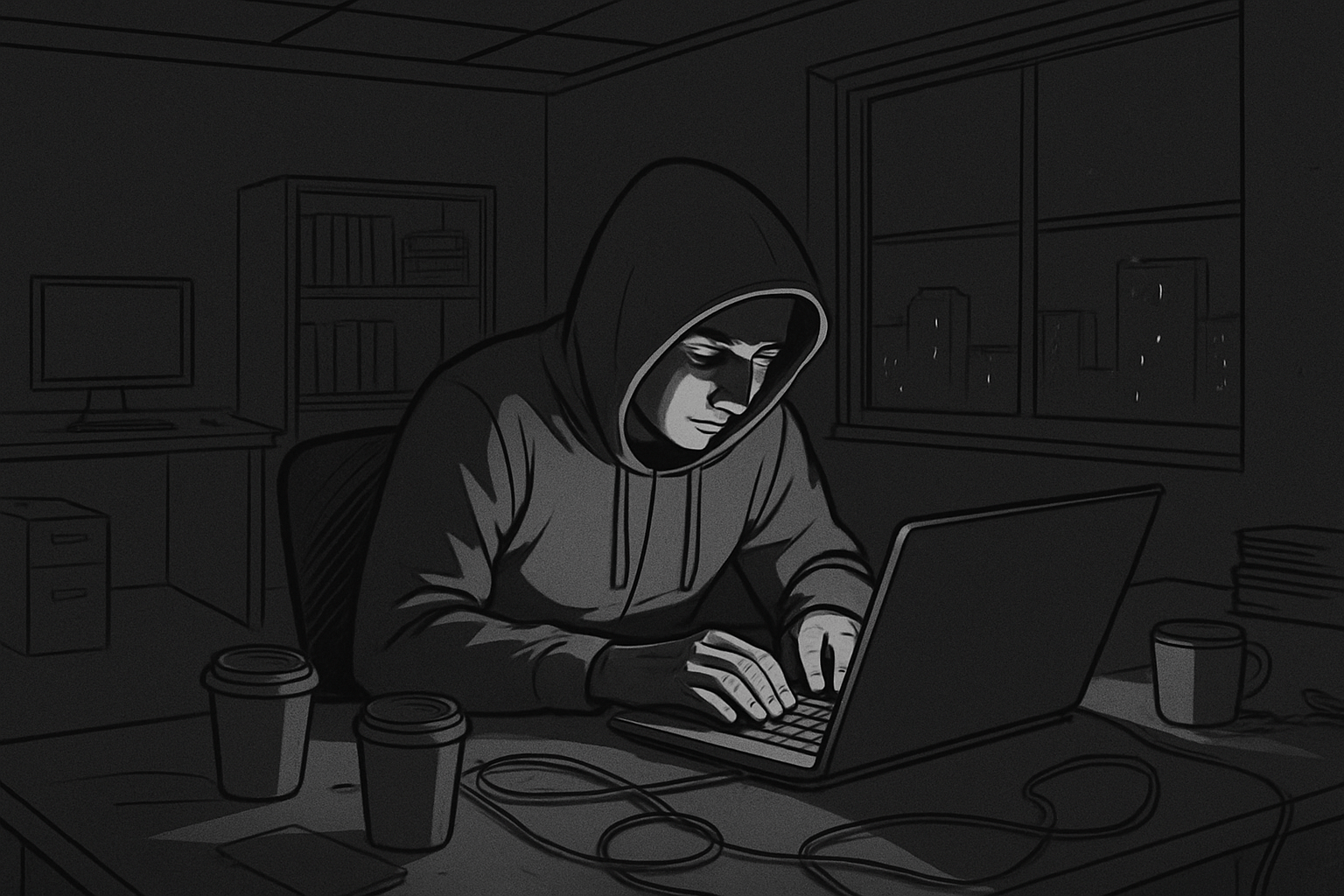
The office was a husk of silence, its rows of empty desks glowing faintly under the sodium-orange wash of the streetlamps outside. The air smelled of coffee grounds and plastic keyboard keys, a strange perfume of late nights that he had long since learned to love. He arrived just after midnight, hoodie pulled low over his head, headphones slung around his neck like armor.
It was the night before the new system was due to go live. Months of promises, revisions, half-sleepless debugging sessions had led to this single moment. Tomorrow, managers would gather in a sleek conference room to demo a product that was supposed to change everything; reduce errors, streamline workflows, automate what once required armies of clerks. But tonight, he was its sole guardian, its surgeon, its final breath of life.
He sat down at his station. The chair creaked under his weight, as though objecting to another long siege. He slid the headphones into place, drowning the world in a carefully curated playlist; steady beats, low enough to fade into the back of his mind, like the steady hum of an operating theater.
Then, he began. Fingers hovered above the keyboard for a heartbeat, then fell into motion. The screen lit up with cascading characters, a river of logic he alone understood.
Every line of code was a stitch, every function a heartbeat. He saw the system not as text, but as a living organism; fragile, pulsing, precariously close to collapse if one mistake went unnoticed. This was brain surgery, performed with a blunt tool, and he knew he could not afford to tremble.
The hoodie helped. It created a tunnel, shutting out the distractions; the buzzing fluorescent lights above, the occasional car horn from the street below, the memory of his colleagues’ anxious faces. With the hood pulled down low, there was only the screen, only the rhythm of typing.
At times, he leaned back and closed his eyes, replaying logic like a chess game: If this request goes here, does the handler catch it? What about edge cases? What if the user forces an empty payload? His mind darted forward, backward, sideways, always five moves ahead, until his chest tightened from the sheer weight of possibilities. Then he would exhale, open his eyes, and resume typing with renewed fury.
The night stretched on. At three in the morning, his coffee was cold, untouched. At four, his back ached, but he refused to move. He typed like a man hammering shut the last nails of a coffin; quick, precise, final. Each keystroke carried both dread and relief.
Outside, dawn was still faraway. Inside, he had already built his sunrise, a fragile constellation of logic glowing against the darkness. And though no one else would ever witness this moment; the hoodie, the headphones, the furious determination. It was here that the project was truly born.
When tomorrow came, executives would clap, clients would smile, and the system would appear seamless. But tonight, in the quiet hours before dawn, it was just him and the machine, locked in a secret pact: I will carry you across the finish line. You will not fail me now.
And so he typed, hoodie low, headphones humming, the quiet savior of something larger than himself.
Scene 2
The Zone
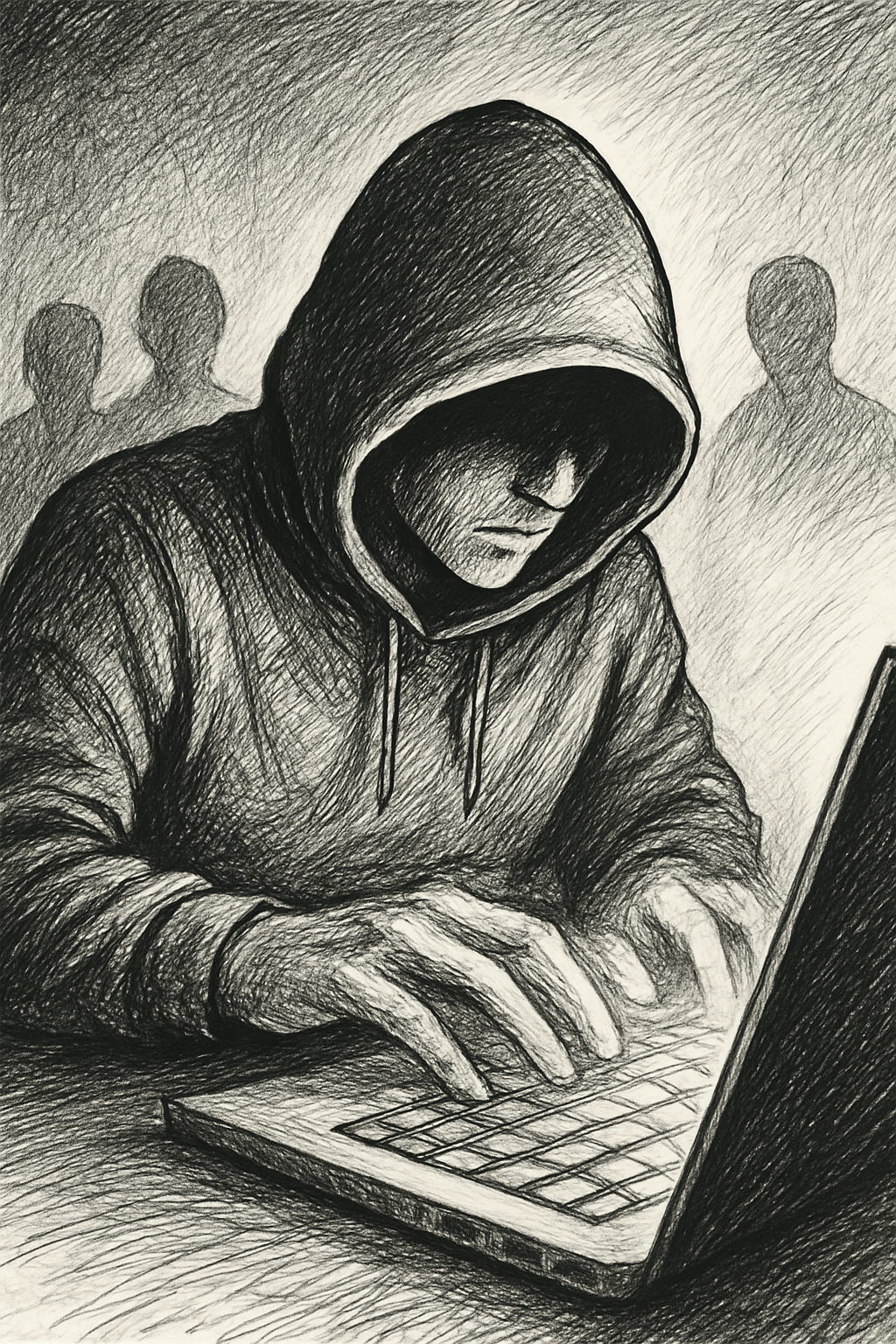
The clatter of keys was relentless, a rhythm that filled the air like a war drum. No one in the office dared to speak above a whisper, though most had left hours ago. Those who remained glanced occasionally in his direction, but quickly returned to their screens. They knew better than to interrupt. When his hoodie was up, it was a signal, a sacred barrier: he was in the zone.
There was something almost frightening about it, the way he worked. His posture was forward-leaning, shoulders tight, as if he were plugged into the machine itself. His fingers moved with unnatural speed, and yet there was no hesitation. Every keystroke carried purpose. He didn’t stop to double-check his work because the checking was happening in his head three lines ahead.
To watch him was to watch someone balancing on the edge of chaos and control. His colleagues joked, when he wasn’t listening, that he wrote code like a surgeon cutting open a brain. And they weren’t far off. This wasn’t just typing. It was surgery; delicate, precise, dangerous.
The system they had built was sprawling, hundreds of thousands of lines tangled together like veins and arteries. A misstep here could bleed into a failure there, a hidden aneurysm waiting to rupture at the worst possible moment. He alone seemed fearless in the face of it. He could trace every thread, anticipate every risk, and stitch solutions into place before they unraveled.
Hours passed without him noticing. The music in his headphones was not music anymore but white noise, scaffolding that held his focus upright. He was aware, dimly, that his neck ached and his eyes burned. But to break the trance would mean risking the fragile balance he had constructed, and that was unacceptable.
For him, this was not work. It was communion. The glowing monitor wasn’t just a tool. It was a mirror, reflecting back the fragments of his own mind. Logic, pattern, recursion: it was the language his brain had always spoken, the place where he felt most at home. In ordinary life, words stumbled out of him awkwardly. But here, on this canvas of text, he was fluent, elegant, almost poetic.
A teammate shuffled past, pausing as though to ask a question. But one glance at the hood, at the hunched intensity of his posture, and the teammate retreated without a word. No one interrupted the zone. They all knew the cost.
And so he continued, line after line, function after function. At one point, he closed his eyes, as if listening for something inaudible. Then, without hesitation, his hands resumed their furious movement, as though responding to a rhythm only he could hear.
It was during these moments that he felt immortal. Here, in the deep quiet of thought made tangible, he believed there was nothing unsolvable, no knot too tangled. The system was a body in surgery, but it was also a battlefield, and he was both doctor and warrior, holding the line alone.
By dawn, his desk was littered with abandoned coffee cups and chewing gum wrappers. His back screamed for mercy, but his eyes still blazed with purpose. The code, stitched and soldered together, was alive now, pulsing with his effort. He had entered the night as a man with a deadline. He emerged as a surgeon who had saved a life.
Scene 3
The Sentence
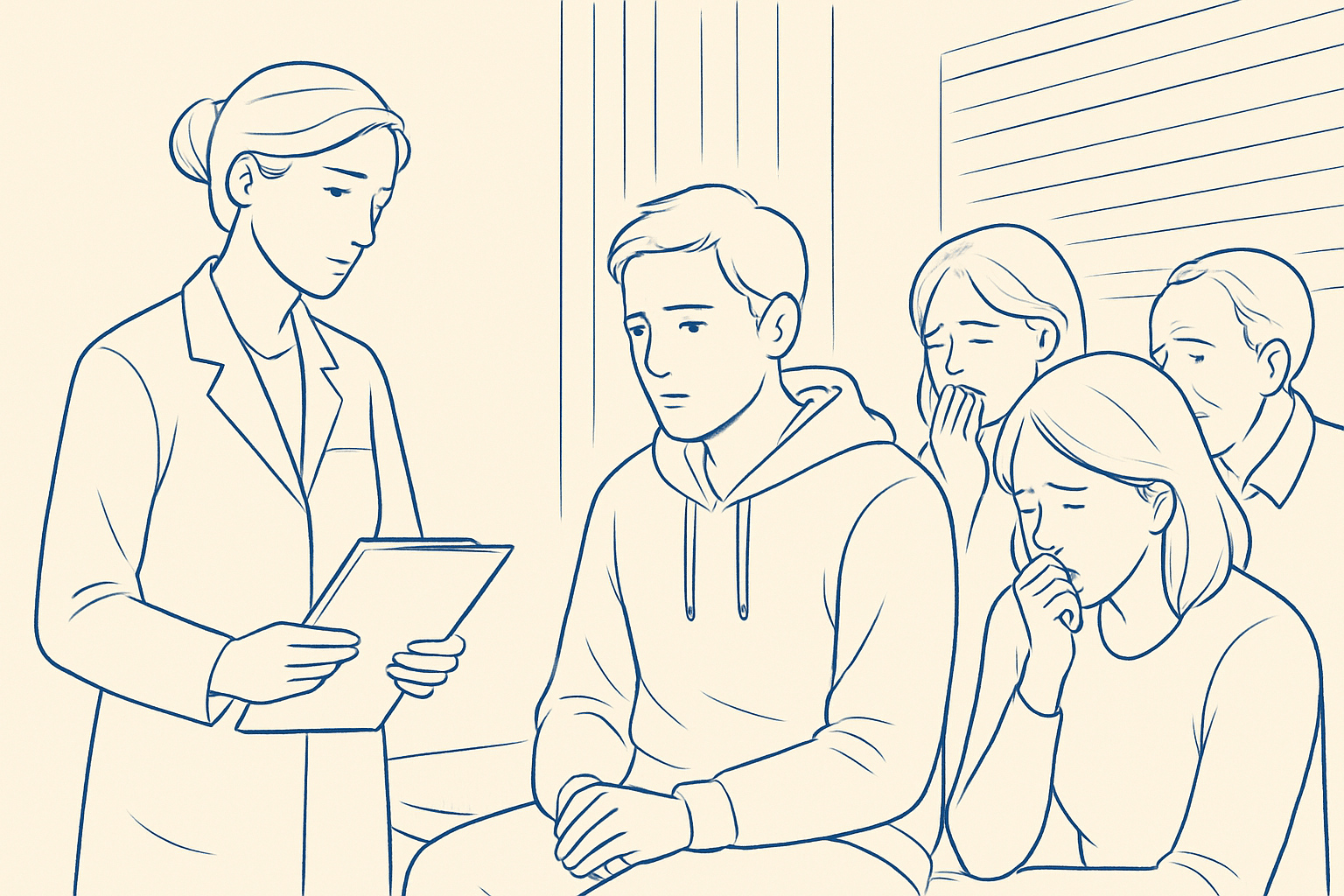
The room smelled faintly of antiseptic, like a place meant for sterility and clean conclusions. The blinds were half-drawn, cutting the morning light into pale stripes across the floor. He sat in the center of it, hoodie off for once, hair unkempt, hands folded neatly in his lap. His family crowded close, their knees almost touching his, the quiet hum of their breathing louder than anything else in the room.
The doctor entered with a quiet confidence, a young woman whose presence seemed to soften the sterile edges of the clinic. Her beauty was unadorned, clear eyes, a kind mouth, hair swept back into a bun more practical than stylish. She carried a folder in one hand, her posture straight, her movements measured. Yet behind her professionalism was a warmth that filled the room almost despite itself.
She spoke carefully, her voice low but steady. The words were familiar to her by now, practiced, but they still trembled with the weight of what they carried: Frontotemporal dementia. Rapid progression. Early onset. Thirty-two years old. The syllables fell like glass breaking, precise and irreversible.
The family broke before she finished. His mother pressed a fist to her mouth to stifle a cry. His sister gripped the armrest of her chair as though bracing against an earthquake. His father, stoic for decades, turned away, unable to watch.
And yet he, the one piece of absorbing the sentence remained perfectly calm. He blinked once, twice, as though registering a pop-up notification on a screen: Error: System will fail sooner than expected.
His response startled everyone in its simplicity. He didn’t look at the young doctor’s eyes, nor the folder she clutched, nor even the stethoscope draped around her neck. Instead, his gaze fell to her hand resting on her lap. A delicate gold band glimmered on her finger.
“That’s a beautiful wedding ring,” he said, his voice even, as though complimenting a colleague on a neat piece of code.
The doctor faltered, her polished delivery breaking for the first time. Her lips parted, surprise flickering in her expression before softening into something almost tender. “Thank you,” she murmured, disarmed by the humanity of the moment.
It wasn’t denial that kept him calm. Nor was it some heroic strain of courage. It was subtler, almost instinctual: the ability to focus on detail, to narrow catastrophe into something small and precise. Just as he once debugged impossible systems line by line, now he dissected his own future into fragments too small to overwhelm him.
He thought of the project he had finished, the one that would go live without him. He thought of the nights under his hoodie, fingers flying like a surgeon’s blade. Each moment had been a complete world in itself, and maybe that was enough.
His family did not see it that way. His mother was sobbing openly now, her shoulders heaving with grief. His sister clutched his arm as though afraid he might dissolve before her eyes. He gave her a faint smile, apologetic, like someone misplacing his keys rather than his mind.
The young doctor continued, explaining therapies, progression timelines, expectations. But her words slid off him like rain on glass. He nodded politely, though his attention stayed elsewhere: on the hum of the air conditioner, the flicker of the fluorescent light, the glint of that wedding ring; a reminder that life, in all its fragility, still persisted.
He knew this was the first day of a different life. The countdown had begun. But systems fail. Memory corrupts. Threads break. He had always known this, even while coding late into the night. The only surprise was that now the failing system was his own mind.
And so he sat quietly, offering small comforts where he could, smiling when appropriate, carrying his own sentence with a composure that only deepened the heartbreak of those who loved him.
Scene 4
The Lasts
She had never realized how easily life divided itself into “lasts” until the doctor’s words carved the world into two halves: before and after.
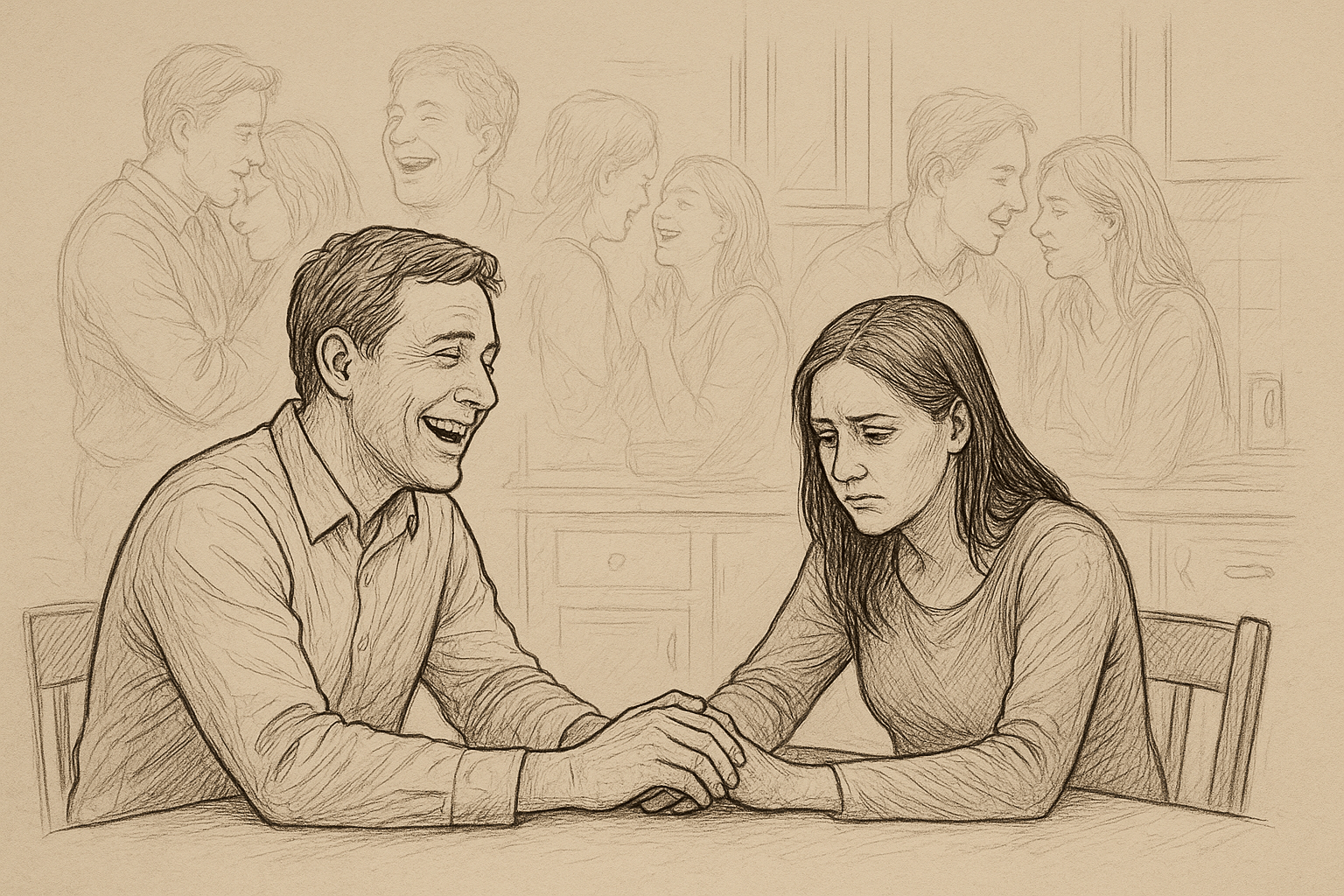
Before, she would laugh at his jokes without hesitation, the punchlines rolling off his tongue in that dry, almost self-deprecating way that made her laugh harder than she wanted to admit. Before, she would tuck herself into his arms at the end of a long day without wondering if that warmth was infinite.
After, everything became a question.
When he cracked a joke over breakfast; something about the butter masala dosa conspiring against him. Her smile froze halfway, her mind jolting. Was that his last joke? When he leaned back on the couch and laughed at a movie scene, his shoulders shaking, eyes lit up with cheerfulness, she found herself watching too closely. Was that his last laugh?
And when he pulled her into a hug, his chin resting lightly on the top of her head, she clung harder than before. Because what if this was the final one? Was that his last hug?
The questions gnawed at her. They weren’t loud, but they were constant, a soft scraping at the edges of her heart. She tried not to let him see it, tried to match his calm, his strange serenity in the face of decline. He seemed determined to live as though nothing had changed, still coding when he could, still listening to music with his hood pulled low, still teasing her about her tendency to overthink.
But she noticed things. She noticed the way he paused mid-sentence, fishing for words that had once come easily. She noticed how his hands sometimes trembled when he typed, his once-fluid keystrokes reduced to awkward stutters. She noticed the way silence lingered longer between conversations, as though he were searching through fog for the thread of connection.
These were small things, but to her, they loomed enormous. Each slip of memory, each hesitation, felt like the ground giving way beneath her. And yet, she couldn’t predict which moment would be the “last” of anything. Would she know it when it happened? Would she recognize his final joke, or would it slip by unnoticed, buried under the ordinary flow of a day?
The unknowing was its own cruelty.
So she began to catalogue everything. Not in notebooks or spreadsheets though he might have approved of that but in her mind. Every smile, every word, every shared silence was etched carefully into her memory, as though she could hoard them against the encroaching storm. At night, lying awake beside him, she would replay them in order, like a private archive.
And yet, she hated herself for it too. Because while she was busy memorializing him, he was still alive, still laughing, still loving her in the present tense. She worried she was already treating him like a memory while he was still here.
One evening, as he dozed on the couch, she traced the outline of his hand with her finger, slow and careful. She thought of all the things those hands had built, all the code they had written, all the ordinary gestures passing her a cup of tea, brushing a strand of hair from her face, holding her steady when she felt she might fall apart. She wondered how much longer those hands would remember their own strength.
She leaned down, kissed the back of his hand softly, and whispered into the quiet room: “Please let this not be the last.”
He stirred, half-awake, and smiled faintly. “You worry too much,” he murmured, unaware of how her heart cracked under the simplicity of it.
And she smiled too, because what else could she do?
Scene 5
The Shattered Roadways
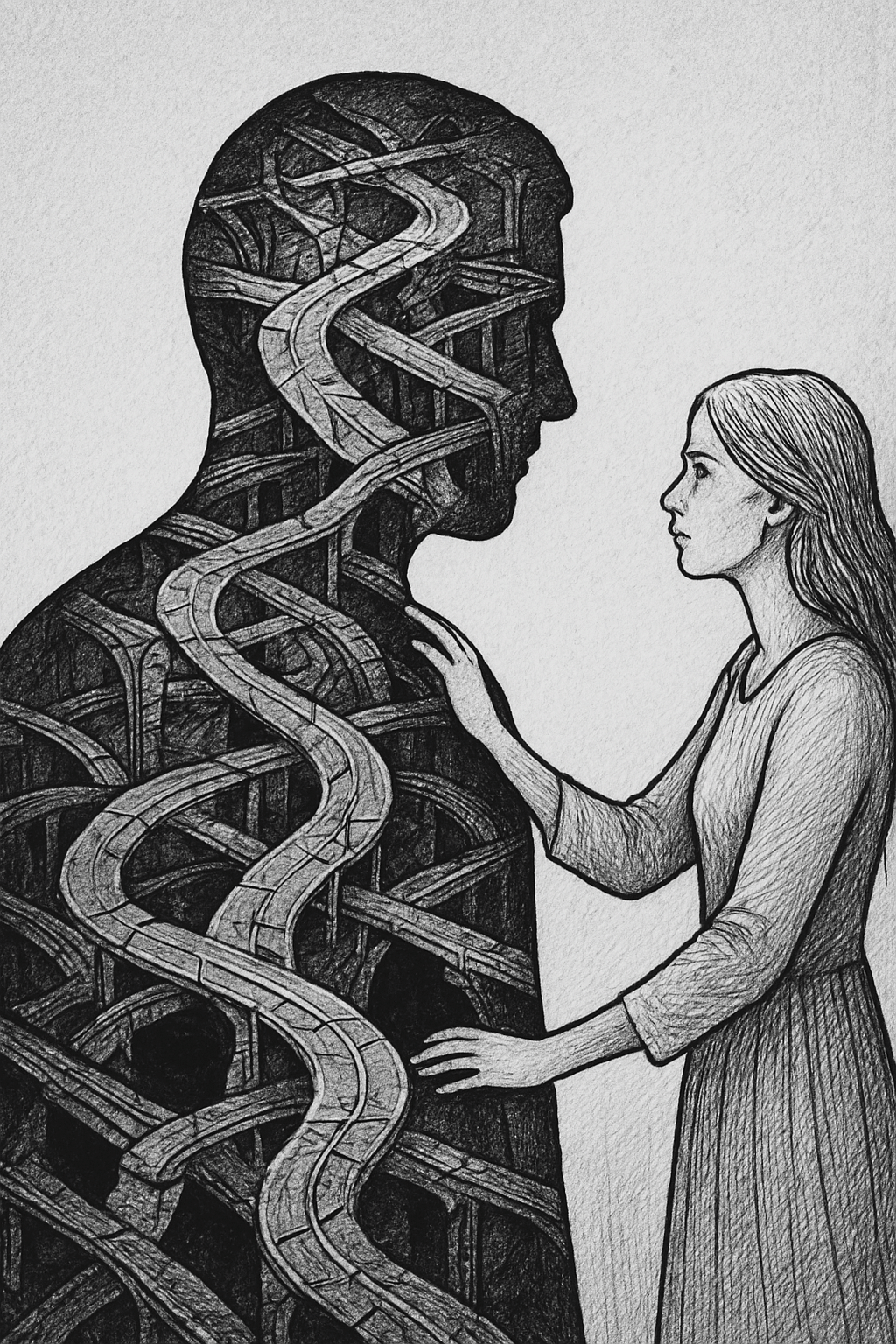
The decline came not all at once, but in fragments. Like a road breaking apart under years of neglect, his mind fractured piece by piece. At first it was words, simple ones names of things he’d held in his hands a thousand times. Then came directions, routines, memories that should have been second nature but now scattered like loose pages in a windstorm.
And yet, somewhere inside, he lingered.
She could see it in flashes, like sunlight breaking through clouds. A wry smile when she teased him, a sudden burst of laug_hter at an old sitcom rerun, the instinctive way he still reached for her hand when crossing the street. Those fragments were maps to who he had been, proof that not everything was gone.
But the rest… the rest was a labyrinth of broken roads.
Sometimes he would stand in the hallway, staring at the wall as though it were a riddle. She would approach gently, touching his shoulder, and he would look at her with bewildered eyes...! Eyes that once had read her like an open book, now filled with static. “I was trying to remember…” he would murmur, voice trailing off, the sentence evaporating before it found its end.
Other times he would drift into silence, sitting for hours with his hoodie pulled low, headphones resting on his lap instead of his ears. The music he once lived inside seemed too complicated now, as though the rhythms demanded roads his mind no longer had.
She imagined his thoughts like a city after an earthquake. Streets she once walked with him, shared jokes, deep conversations, long nights of planning their future were now fissure and impassable. Bridges were collapsed. Whole neighborhood of memory lay in ruins. And yet, here and there, fragments still flickered: a lamp still burning in a broken house, a corner shop still standing amid the rubble.
One evening, he surprised her. They were walking back from the store, bags of groceries crinkling in her hands, when he suddenly pointed at the horizon. “That’s… that’s where we had our first date,” he said, voice tentative, like he was reaching for a word at the edge of a cliff. Her heart lurched. He was right. The little cafe with chipped mugs and terrible coffee was just a few blocks away. For a moment, the roadway of his mind had rebuilt itself, if only long enough to let one memory pass through.
She smiled, blinking back tears, and nodded. “Yes,” she said. “Yes, it was.”
Moments like that became treasures, rare, and fragile. They reminded her that even in the wreckage, he lingered. Not whole, not the same, but present.
And she clung to that presence. Because what else could she do? She walked those shattered roadways with him, guiding him when the streets collapsed, celebrating when a bridge briefly reappeared. She learned not to measure him by what was lost, but by what remained.
In the end, he was no longer the surgeon at the keyboard, no longer the man who had once commanded systems with furious grace. He was something quieter now: a flickering light, a shadow of laughter, a hand that still found hers in the dark.
However, diminished, he lingered. And in those lingering fragments in the broken roads, the half-remembered paths... she loved him still.
Related links:
In case, you missed my previous story: